Is Your Hotel Door Lock System Up to Industry Standards?
The technical performance parameters of the guest room door lock system are the cornerstone of security. Mechanical lock cores that comply with international standards such as ISO 8274 usually need to have a lock tongue (lock buckle) length of more than 14mm to effectively resist violent prying and pressing. Experimental data shows that an impact force of more than 3800 Newtons is required to break them. In terms of electronic door locks, mainstream brands use RFID or Bluetooth /NFC modules with 32-bit or 128-bit encryption technology, which can handle over 50 authentication requests per second. For instance, in the global upgrade project of Hilton Group in 2021, electronic locks were deployed in its 3,800 guest rooms. The action time of the lock tongue driven by the motor was strictly controlled within 0.8 seconds, and the working voltage of the lock body was stable within the range of 5V DC ±10%. It can operate reliably within a temperature range of -20°C to 70°C and a humidity range of 20% to 85%. The battery life generally exceeds 2 years or 50,000 opening and closing cycles.
The strength of physical protection and security configuration directly determine the ability to resist risks. The hotel lock body complies with the highest Grade 1 certification of ANSI/BHMA A156.25 in the United States, and its lock tongue can withstand more than 50 strong impact tests. The lock face plate is made of 304 stainless steel or high-strength zinc alloy, with a thickness usually ≥ 2mm, and the Vickers hardness (HV) needs to reach above 150. The 2022 security audit report of a large resort in Las Vegas revealed that old locks that did not meet this standard took an average of only 72 seconds to resist the damage caused by hydraulic shears in simulated intrusion tests. The upgraded models that meet the standards are extended to 187 seconds. The system integrating door magnetic sensors and door clovers can reduce the risk of tailgating intrusion by up to 30%, and it is required that the gap width after the door is closed be no more than 4mm. Redundant power supply design, such as 4 AA main batteries and an emergency 9V battery interface, ensures more than 24 hours of power-off protection and is a standard feature of luxury hotel brands.
System integration and management efficiency are at the core of operation. Modern hotel lock management systems can centrally control thousands or even tens of thousands of door locks (such as in large resorts). Through the API interface of PMS (Hotel Management System), guests can self-check in and receive the virtual Key (Mobile Key) within 15 seconds. Compared with traditional mechanical keys, the electronic lock system can reduce the time for the front desk to make key cards from 3 minutes to 15 seconds, and the cost of key loss is zero. Statistics from Marriott International after deploying its Mobile Key technology show that 63% of guests tend to choose rooms that offer mobile phone unlocking, indirectly increasing the average transaction value. Audit log recording accuracy reaches the millisecond level, which is crucial for handling disputes. The system must be capable of storing at least 10,000 event records, including real-time monitoring data such as door lock status, temperature (such as alarm when the chip overheat ≥ 65°C), and battery level (warning when <20%). And it is transmitted through the HTTPS/TLS 1.3 encryption protocol to reduce the risk of data leakage.
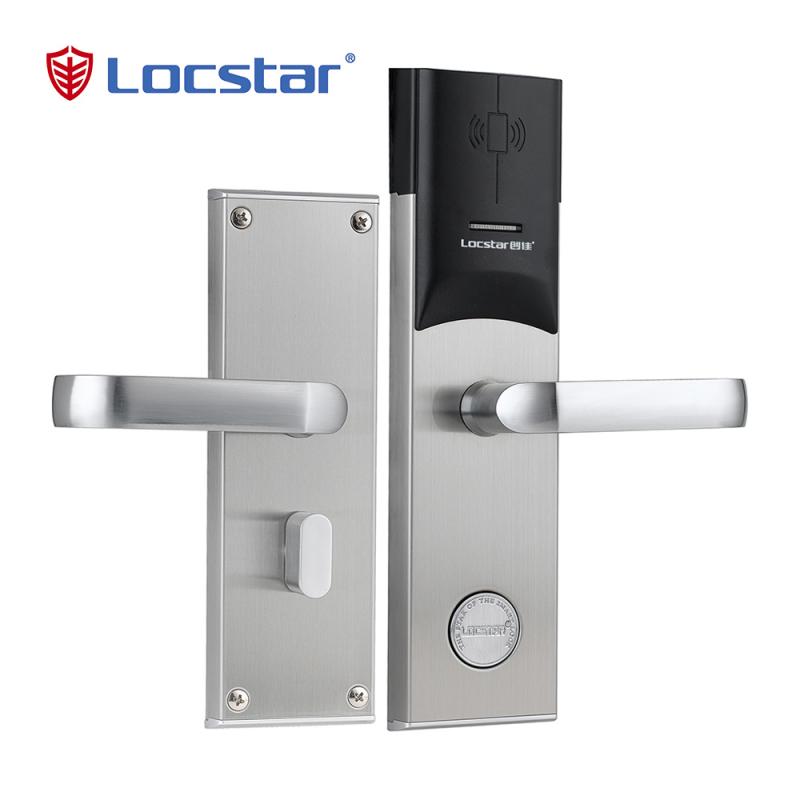 Return on investment (ROI) and life cycle cost are key factors in decision-making. Although the single lock purchase cost of high-quality electronic door locks that comply with ANSI/BHMA Grade 1/2 or the European EN 1303 standard is in the range of USD 150-400 (higher than the USD 50-150 of ordinary mechanical locks), their comprehensive benefits are significant. Data from the hotel's engineering department shows that traditional mechanical locks need maintenance or lock core replacement on average every 18 months, with an annual maintenance cost of USD 80 per room. The maintenance frequency of certified electronic locks has been reduced to every 3 to 5 years, and the average annual cost has dropped to USD 15 to 30 per room. The asset management report of globally renowned brand hotels (such as intercontinental) confirms that a door lock system that meets industry standards can reduce the total cost of ownership (TCO) over five years by approximately 34%, lower the rate of guest complaints due to door lock malfunctions by 55%, and at the same time, the insurance rate can be negotiated to be reduced by 5-10%. Systems that comply with major safety regulations and certifications (such as UL, CE, and China GA) can also avoid potential penalties.
When the hotel door lock with RFID function is certified by ISO 18749, the deviation of its data reading distance can be controlled within ±1mm, ensuring a card swiping success rate of 99.99%. The value of industry standards lies in transforming abstract concepts such as safety, efficiency, and cost into quantifiable rigid indicators (such as lock tongue strength, encryption level, and environmental tolerance), and verifying their necessity through examples like those of giants like Hilton and Marriott, as well as the Las Vegas security incident. Ensuring that all parameters of your system (voltage/temperature/material/encryption standards) meet the aforementioned key values is the only way to maintain the hotel's assets, reputation and regulatory compliance.
Return on investment (ROI) and life cycle cost are key factors in decision-making. Although the single lock purchase cost of high-quality electronic door locks that comply with ANSI/BHMA Grade 1/2 or the European EN 1303 standard is in the range of USD 150-400 (higher than the USD 50-150 of ordinary mechanical locks), their comprehensive benefits are significant. Data from the hotel's engineering department shows that traditional mechanical locks need maintenance or lock core replacement on average every 18 months, with an annual maintenance cost of USD 80 per room. The maintenance frequency of certified electronic locks has been reduced to every 3 to 5 years, and the average annual cost has dropped to USD 15 to 30 per room. The asset management report of globally renowned brand hotels (such as intercontinental) confirms that a door lock system that meets industry standards can reduce the total cost of ownership (TCO) over five years by approximately 34%, lower the rate of guest complaints due to door lock malfunctions by 55%, and at the same time, the insurance rate can be negotiated to be reduced by 5-10%. Systems that comply with major safety regulations and certifications (such as UL, CE, and China GA) can also avoid potential penalties.
When the hotel door lock with RFID function is certified by ISO 18749, the deviation of its data reading distance can be controlled within ±1mm, ensuring a card swiping success rate of 99.99%. The value of industry standards lies in transforming abstract concepts such as safety, efficiency, and cost into quantifiable rigid indicators (such as lock tongue strength, encryption level, and environmental tolerance), and verifying their necessity through examples like those of giants like Hilton and Marriott, as well as the Las Vegas security incident. Ensuring that all parameters of your system (voltage/temperature/material/encryption standards) meet the aforementioned key values is the only way to maintain the hotel's assets, reputation and regulatory compliance.
Return on investment (ROI) and life cycle cost are key factors in decision-making. Although the single lock purchase cost of high-quality electronic door locks that comply with ANSI/BHMA Grade 1/2 or the European EN 1303 standard is in the range of USD 150-400 (higher than the USD 50-150 of ordinary mechanical locks), their comprehensive benefits are significant. Data from the hotel's engineering department shows that traditional mechanical locks need maintenance or lock core replacement on average every 18 months, with an annual maintenance cost of USD 80 per room. The maintenance frequency of certified electronic locks has been reduced to every 3 to 5 years, and the average annual cost has dropped to USD 15 to 30 per room. The asset management report of globally renowned brand hotels (such as intercontinental) confirms that a door lock system that meets industry standards can reduce the total cost of ownership (TCO) over five years by approximately 34%, lower the rate of guest complaints due to door lock malfunctions by 55%, and at the same time, the insurance rate can be negotiated to be reduced by 5-10%. Systems that comply with major safety regulations and certifications (such as UL, CE, and China GA) can also avoid potential penalties.
When the hotel door lock with RFID function is certified by ISO 18749, the deviation of its data reading distance can be controlled within ±1mm, ensuring a card swiping success rate of 99.99%. The value of industry standards lies in transforming abstract concepts such as safety, efficiency, and cost into quantifiable rigid indicators (such as lock tongue strength, encryption level, and environmental tolerance), and verifying their necessity through examples like those of giants like Hilton and Marriott, as well as the Las Vegas security incident. Ensuring that all parameters of your system (voltage/temperature/material/encryption standards) meet the aforementioned key values is the only way to maintain the hotel's assets, reputation and regulatory compliance.