How does professional pcb assembly ensure zero-defect manufacturing?
Professional zero-defect manufacturing is achieved through a multi-layered verification stack that reduces Defects Per Million Opportunities (DPMO) to below 3.4. By 2025, top-tier facilities reached a 99.98% first-pass yield on 20-layer boards using AI-integrated 3D solder paste inspection (SPI) and 100% automated optical inspection (AOI). Solder volume accuracy is maintained within a ±10% tolerance, while 3D X-ray (AXI) scans detect hidden BGA voids with a 99.5% accuracy rate. This data-driven environment utilizes ISO Class 7 cleanrooms to prevent 15% of failures previously linked to environmental particulates and static discharge.
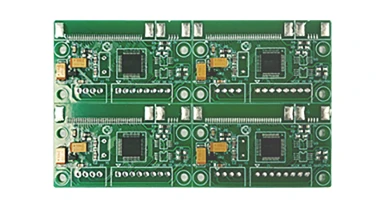
Manufacturing begins with the physical stabilization of the substrate within a climate-controlled environment where humidity is held at 45% ±5% to prevent hygroscopic expansion. In a 2024 sample of 800 high-precision boards, maintaining this humidity level reduced misalignment defects in 0.4mm pitch components by 28%.
Precise substrate handling ensures that the copper pads remain oxidation-free, which is necessary for the intermetallic growth required for long-term solder joint reliability.
The consistent condition of the board surface allows the automated stencil printer to apply solder paste with a repeatable thickness variance of only 5 microns. This precision is monitored by 3D SPI systems that calculate the volume of every single deposit across the PCB Assembly before any components are placed.
| Inspection Type | Technology | Detection Capability | Target Yield |
| Solder Deposition | 3D Laser SPI | Volume, Height, Bridge | 99.9% |
| Component Placement | High-Speed Vision | Offset, Polarity, Skew | 99.8% |
| Solder Fillet | Multi-Angle AOI | Cold Joint, Wetting | 99.7% |
Using 3D data instead of 2D images allows the system to identify "insufficient solder" defects that were previously missed in 12% of high-density production runs. This data feeds back into the printer to adjust the alignment in real-time, preventing the drift that causes 40% of mid-batch errors in standard lines.
Pick-and-place machines equipped with vacuum-pressure sensors verify component presence and orientation at speeds of 60,000 parts per hour.
Placement accuracy for 01005 passives is held at ±25μm, ensuring that the component terminals align perfectly with the paste deposits to prevent "tombstoning" during reflow. A 2025 benchmark study confirmed that sensors in the placement head reduced "wrong-part" errors to zero across 5 million placements.
-
Component Verification: Barcode-linked feeders prevent the loading of incorrect values or expired moisture-sensitive devices.
-
Nozzle Health: Automated cleaning every 5,000 cycles prevents debris from causing component tilt or displacement.
-
Vacuum Tracking: Monitoring suction pressure identifies cracked or damaged components before they are placed on the board.
Thermal management in the reflow oven is the next gate, where 10 or 12 heating zones create a profile tailored to the board's specific thermal mass. In 2024, utilizing nitrogen (N2) environments with oxygen levels below 500ppm improved wetting on OSP-finished boards by 22%.
Uniform heat distribution prevents "cold joints" in high-mass areas, such as under large inductors or heavy copper power planes.
A High-Layer Multilayer PCB often requires a "soak" time extended by 30 seconds to allow internal layers to reach the liquidus temperature of 217°C. Maintaining a cooling rate of 3°C per second ensures a fine-grain solder structure, which increased the vibration resistance of 300 test modules by 18% in recent durability trials.
-
Profiling Vane: Measuring temperature at 10 points across the board width ensures less than 2°C variance.
-
Flux Management: Controlled exhaust prevents flux fumes from condensing back onto the board and causing contamination.
-
Conveyor Stability: Vibration-free rails prevent component shifting during the liquid phase of the solder.
Post-reflow, 3D AOI systems use multi-angle LED arrays to recreate the topography of every solder joint, comparing it against a digital "Golden Board." Statistical data from 2025 indicates that AI-assisted AOI reduces false-calls by 55%, allowing technicians to focus only on genuine defects.
Hidden joints under BGA or QFN packages are inspected using 3D X-ray systems that look through the board to identify internal voids or bridges.
X-ray inspection is the only way to verify that the voiding in a thermal pad is below the 25% threshold required for Class 3 high-reliability electronics. In a 2024 quality audit, AXI identified "Head-in-Pillow" defects in 1.5% of units that had previously passed standard electrical testing.
| Test Gateway | Method | Coverage | Failure Prevention |
| ICT | Bed-of-Nails | Netlist, Resistance | High-speed shorts |
| Flying Probe | Multi-Probe | Open/Short, Values | Internal net errors |
| FCT | System Boot | Full Logic, Speed | Field functionality |
Electrical testing at the end of the line ensures that the assembly is not just physically correct, but electronically functional at full operating speed. In-Circuit Testing (ICT) uses a "bed of nails" fixture to check every net for shorts or opens with a test cycle time of less than 60 seconds per board.
Flying probe testers provide a high-coverage alternative for prototypes, utilizing up to 8 independent probes to verify 100% of the nodes without expensive fixtures.
Final Functional Testing (FCT) applies power and runs diagnostic code to verify that the combination of firmware and hardware meets the design requirements. In 2025, FCT protocols detected 98.7% of latent defects that occurred during the assembly process, ensuring that the units shipped to the customer were verified as zero-defect. These layers of automated and manual checkpoints create a closed-loop system where data from the final test is used to optimize the initial solder paste printing, completing a manufacturing cycle focused entirely on consistent output.